Nisha
Sharma
Department
of Computer Science & Information Technology
Puran
Murti Vidyapeeth
We
are living through one of the most remarkable transformations in human history.
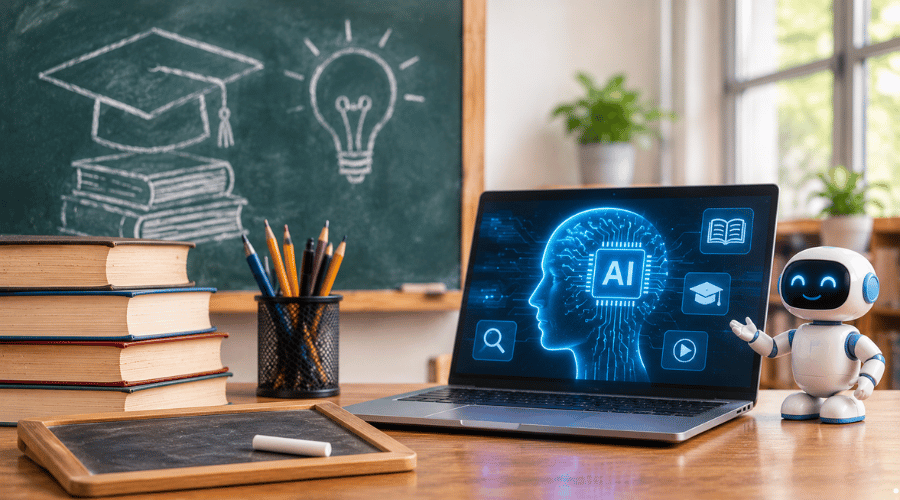
The chalkboard, which anchored classrooms for generations, now coexists with
interactive smart panels, cloud-based learning management systems, and
generative artificial intelligence. For students sitting in classrooms today,
technology is not an external gadget to be discovered; it is the native
environment in which they learn, communicate, and perceive the world.
Yet,
as an educator working daily at the intersection of Computer Science,
Information Technology, Informatics Practices, and Artificial Intelligence, I
observe an important paradox. Today’s generation is undoubtedly tech-savvy,
spending hours navigating screens with effortless intuition. However, swiping
through endless feeds, watching streaming media, or playing hyper-realistic
games makes them adept consumers of digital content—not necessarily creators of
digital solutions.
The
essential mission of modern computer education is bridging that critical gap:
guiding students to step out of the audience and into the role of the
architect.
Moving Beyond Syntax: The Real Power
of Computational Thinking
When
young learners write their first line of code or query a relational database,
they frequently ask: "Will I use this if I do not become a software
engineer?" The answer is an emphatic yes.
Learning
concepts in Python, SQL, or algorithm design is not merely vocational training
for future coders; it is an exercise in structured problem-solving.
Computational thinking teaches a student how to break an overwhelming, multi-layered
problem into modular components (decomposition), identify patterns across
complex scenarios (abstraction), and formulate clear, step-by-step solutions
(algorithmic design). A commerce student analysing financial spreadsheets, a
humanities researcher sifting through historical census data, and a biology
student mapping genetic sequences all rely on the same underlying
analytical muscle.
When
students learn to manipulate data structures, build automated marksheets, or
clean an imperfect dataset, they are learning how to bring order to chaos. They
discover that a computer does not possess innate wisdom—it simply reflects
human logic executed with relentless precision.
The Rise of Generative AI:
Collaborator, Not Crutch
Over
the past two years, artificial intelligence has leapt from abstract
theoretical laboratories directly into students' pockets. With conversational
models capable of drafting essays, writing functions, and solving complex
physics equations in seconds, education stands at a historic crossroads.
There
is an understandable instinct to view such powerful tools with scepticism.
However, attempting to build digital walls around artificial intelligence is
both futile and counterproductive. Instead, our classrooms must cultivate AI
literacy.
Students
need to understand that artificial intelligence is a powerful accelerator, but
it is fundamentally a collaborator—not a replacement for the human mind. An AI
model can produce five different variations of an essay or generate initial
code boilerplate, but it cannot evaluate nuances, verify factual authenticity,
or experience empathy. When a student relies on an algorithm to complete their
homework without engaging their own intellect, they forfeit the cognitive
struggle where genuine learning occurs.
In
our classrooms, we must teach students to interrogate technology: Where did
this data originate? What inherent biases might exist within this output? How
do I verify this claim? True technological fluency lies not in pressing a
button, but in knowing whether the result is accurate, ethical, and meaningful.
Fostering Digital Discipline and
Ethics
Alongside
innovation comes the equally urgent imperative of digital well-being and
ethics. As boundaries between physical and virtual spaces blur, cybersecurity
and cyber hygiene can no longer remain isolated chapters in an elective
textbook.
Every
young person must develop an active awareness of their digital footprint.
Understanding data privacy, recognising manipulative design patterns, resisting
phishing attempts, and maintaining academic integrity are life skills as
crucial as basic numeracy. Furthermore, we must continually remind our students
that balance is essential. Screens are powerful vehicles for creativity and
exploration, but they should never displace deep reading, quiet reflection,
physical play, and real-world human connection.
Looking Ahead
The
workplace of the 2030s and beyond will not reward individuals simply for
remembering static facts—search engines and intelligent agents already handle
retrieval effortlessly. The future belongs to those who can ask the right
questions, synthesise disparate ideas, navigate ethical ambiguities, and build
solutions using technology as an instrument of positive change.
As
educators and mentors, our greatest privilege is watching a student move from
being a bewildered observer of technology to an empowered innovator—the moment
a line of code executes cleanly, an automated database query delivers clarity,
or an AI concept sparks a brand-new project idea. By nurturing curiosity,
resilience, and ethical responsibility, we prepare our students not just to
survive the digital future, but to lead it with wisdom and purpose.