Beyond the Degree
How
Indian Employers Are Redefining Merit in the Skills Economy
For generations, a university degree
was considered the ultimate passport to professional success in India. Parents
encouraged children to pursue prestigious qualifications; employers screened
candidates based on academic credentials and educational institutions served as
the primary gateway to career opportunities. That equation is beginning to
change.
Across industries, employers are
increasingly shifting their attention from what candidates have studied to what
they can actually do. Degrees still matter, but they are no longer the sole
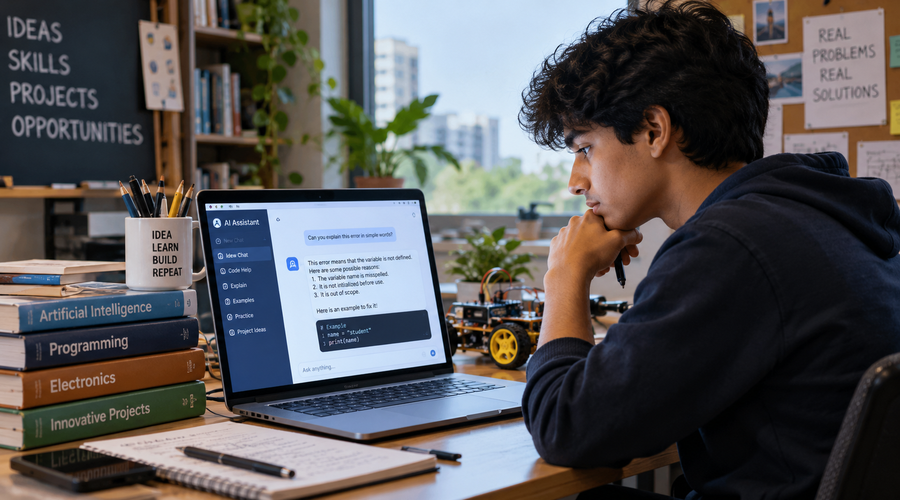
measure of talent. Skills, certifications, portfolios and practical experience
are emerging as powerful indicators of employability. This transformation is
quietly redefining merit in the Indian job market and reshaping the future of
work.
The
Rise of Skills-First Hiring
The modern workplace is evolving
faster than traditional education systems can often keep pace with. Technologies
such as Artificial Intelligence, cloud computing, cybersecurity, digital
marketing and data analytics are creating entirely new job roles. Many of these
skills were not part of university curricula a decade ago. As a result,
employers are increasingly adopting a skills-first hiring approach.
Rather than focusing exclusively on
academic qualifications, recruiters want evidence of practical capability. They
seek candidates who can solve problems, work with digital tools and contribute
immediately to business objectives. Global companies such as Google, IBM and
Accenture have publicly supported skills-based hiring initiatives in various
markets. Their influence is encouraging organisations around the world to
rethink traditional recruitment models. India is increasingly becoming part of
this global shift.
Certifications
Gain New Importance
One of the clearest signs of change
is the growing value of professional certifications. Students and working
professionals are supplementing traditional degrees with specialised credentials
that demonstrate expertise in specific domains. Certifications in cloud
computing, project management, cybersecurity, financial analysis and Artificial
Intelligence have become highly sought after. Platforms offering industry-recognised credentials have witnessed significant growth in recent years. For
example, certifications from Microsoft, Amazon Web Services and Cisco are often
viewed favourably by employers because they validate practical skills that are
directly relevant to workplace needs. For many candidates, certifications have
become valuable tools for enhancing employability and staying competitive in
rapidly changing industries.
Portfolios
Are Becoming the New Resume
Another significant trend is the
rise of portfolio-based evaluation. In the past, resumes primarily listed
educational qualifications and work experience. Today, employers increasingly
want proof of ability rather than simple descriptions of it. A software
developer may showcase applications built on personal projects. A graphic
designer can present a collection of creative work. A digital marketer may
demonstrate successful campaigns and measurable outcomes.
Portfolios provide tangible evidence
of skills and often reveal far more about a candidate than academic transcripts
alone. This trend is particularly strong in fields such as technology, media,
design, content creation and business consulting, where practical outcomes
matter as much as theoretical knowledge. For young professionals entering the
workforce, building a portfolio is becoming almost as important as earning a
degree.
Alternative
Credentials Enter the Mainstream
The definition of education itself
is expanding. Beyond degrees and diplomas, employers are increasingly
recognising alternative credentials. Online courses, micro-credentials, boot
camps and industry training programmes are gaining acceptance across many
sectors. A candidate who has completed a specialised programme in data
analytics or user experience design may be considered alongside applicants
holding traditional academic qualifications.
The popularity of platforms such as
Coursera and Udemy reflects this shift. Learners can now acquire job-relevant
skills from globally recognised instructors without necessarily enrolling in a
full degree programme. This trend is democratising access to learning and
creating new pathways into high-growth industries.
Why
Employers Are Changing
Several factors are driving this
transformation. First, businesses face increasing pressure to find talent
quickly. Skill shortages in areas such as Artificial Intelligence,
cybersecurity and advanced analytics have encouraged employers to broaden their
talent pools. Second, technological disruption is shortening the lifespan of
many skills. Employers need professionals who can learn continuously rather
than rely solely on knowledge acquired during university studies.
Third, practical competence is often
easier to measure than academic performance. A candidate who can demonstrate
capability through projects, certifications and work samples provides employers
with greater confidence during recruitment. The result is a hiring environment
where evidence of skills often carries as much weight as formal qualifications.
The
Future of Merit
India's employment landscape is
entering a new era. Merit is no longer defined solely by the name of a
university or the title of a qualification. Increasingly, it is being measured
through demonstrated capability, adaptability and real-world impact. This does
not mean degrees are losing relevance. Rather, they are becoming part of a
broader ecosystem of credentials that includes skills, certifications,
portfolios and lifelong learning.
For employers, this shift creates
access to a wider and more diverse talent pool. For students, it creates new
opportunities to prove their abilities beyond traditional academic pathways. The
future of work will belong not just to those with impressive qualifications,
but to those who can continuously learn, adapt and demonstrate value. In the
skills economy, what you can do is becoming just as important as what you have
studied.
Source: ETN