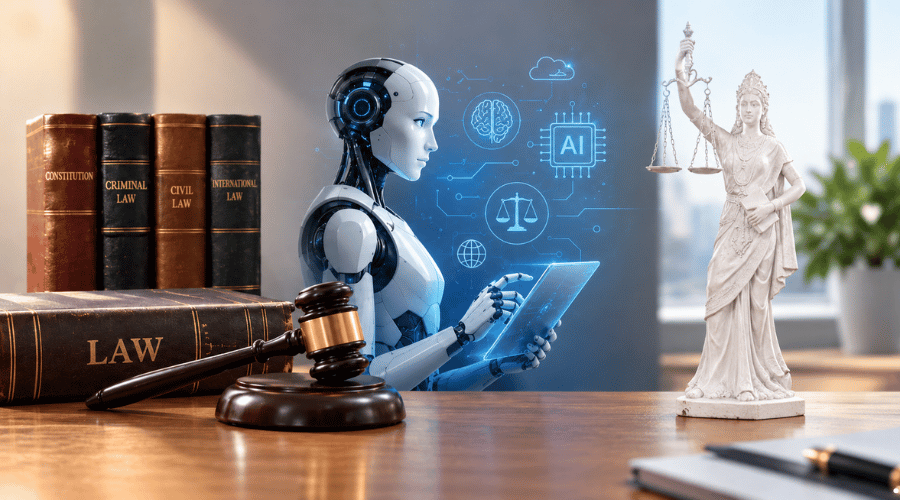
ARTIFICIAL
INTELLIGENCE: OPPORTUNITY, NOT A THREAT
Author: Dr Sumita Kumari
Email: sumitabajia87@gmail.com
Puran Murti College of Pharmacy
1.1 Redesigning
Human Potential in the Era of Intelligent Technology
Artificial Intelligence (AI)
is no longer a concept for the future; it is not only about science-fiction
movies and research laboratories. It has quietly become part of our everyday
lives - the recommendations we receive online, the navigation systems that
guide our journeys, advanced medical diagnostics, personalised education,
scientific discovery and intelligent business systems.
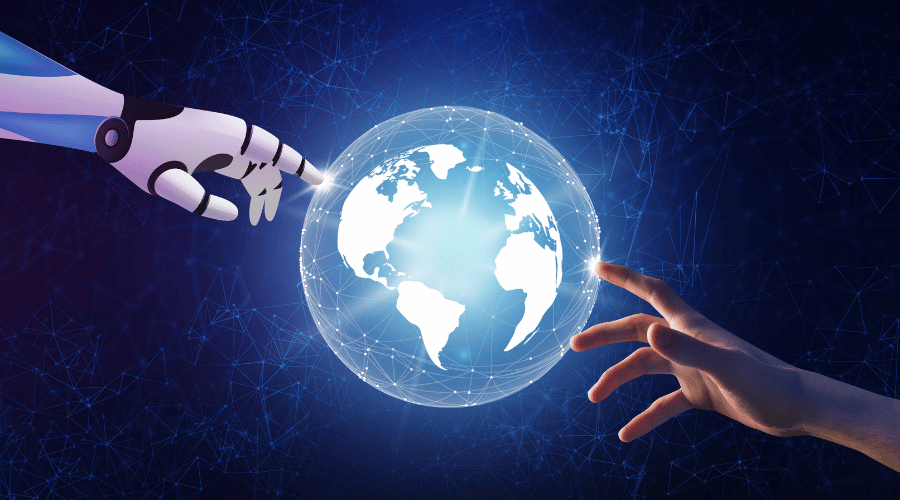
A big question arises: will
artificial intelligence replace human beings?
That answer might not be as
scary as it sounds, but AI is an effective instrument that can boost human
intelligence, creativity, productivity, and problem-solving abilities. The
question is not “Will AI take over humans?” The question is, “How do humans and
AI work together to do what.
1.2 The
shift from Automation to Augmentation
One of the most common fears
about AI is job displacement. Intelligent machines can automate repetitive
tasks, analyse huge amounts of data, generate content, detect trends, and
perform complicated calculations in seconds. This, of course, brings up
questions about jobs.
Instead of replacing all jobs,
AI is increasingly augmenting human ability. Doctors can use AI-assisted
systems to detect patterns in medical images. A scientist might use AI to
analyse thousands of science papers. Intelligent platforms can assist a teacher
in personalising learning. A chemist can take advantage of AI-supported drug
discovery, medication safety analysis and patient-care systems.
The future is increasingly
that of AI-assisted professionals.
1.3 AI
and The Future of Learning
Artificial intelligence can
open up extraordinary opportunities in education and elsewhere. AI
is changing how students learn, how teachers teach, how educational content is
created, and how learning outcomes are evaluated. From intelligent tutoring
systems and personalised learning platforms to AI-assisted research and
automated feedback, technology is creating possibilities that were unimaginable
only a few years ago. An AI is able to provide information; a teacher can
provide direction and purpose. The most powerful classroom of the future may be
one where human mentorship and artificial intelligence work side by side.
1.4 AI
in Healthcare: Data to Discovery
Today’s medicine produces a
vast amount of data. It can be hard for humans to process their own medical
records, lab reports, imaging data, genomic info, clinical research and drug
databases.
Artificial intelligence can
assist health care professionals in spotting patterns and in making
evidence-based decisions.
In pharmaceutical sciences, AI
is helping with areas such as:
Drug Discovery, Drug
Development, Individualised Medicine, Pharmacovigilance, Formulation
Development
So, the future of health care
is not simply “human versus machine.” It's "machine intelligence augmented
by human expertise. “From discovering medicines
to supporting clinical decisions, AI is becoming a powerful partner in
healthcare.”
1.5 AI
as a Force for Discovery in Science
Artificial intelligence can
speed up discovery, but humans are still accountable for determining if it's
meaningful, reliable and ethically sound. AI acts as a new partner in the laboratory. The impact of AI extends far beyond
healthcare and pharmacy.
1.6 Creativity
in the Era of AI
AI is able to create images,
music, stories, designs, presentations, and ideas. It can bring together
information in novel ways and generate outputs that look remarkably creative.
But human creativity is rooted in experience, emotion, culture, imagination,
curiosity, and lived reality. AI can create possibilities. We give these
possibilities meaning.
The artist decides what
deserves expression.
The writer decides what
deserves to be said.
The scientist decides which
question is worth investigating.
The entrepreneur decides which
idea can solve a real problem.
1.7 The
Skills That Will Matter Tomorrow
Future professionals will
require more than technical knowledge. They will require a mix of technology
knowledge and uniquely human qualities. As a result, the future workforce will
require more than just AI skills. It will require individuals who understand
when, why, and how to employ artificial intelligence responsibly. The goal
should be to develop and implement AI because it adds true value to humans. This
is not the future in which machines replace humans. It is a future in which
technology enables humans to achieve more.
Conclusion:
The Opportunity is Ours
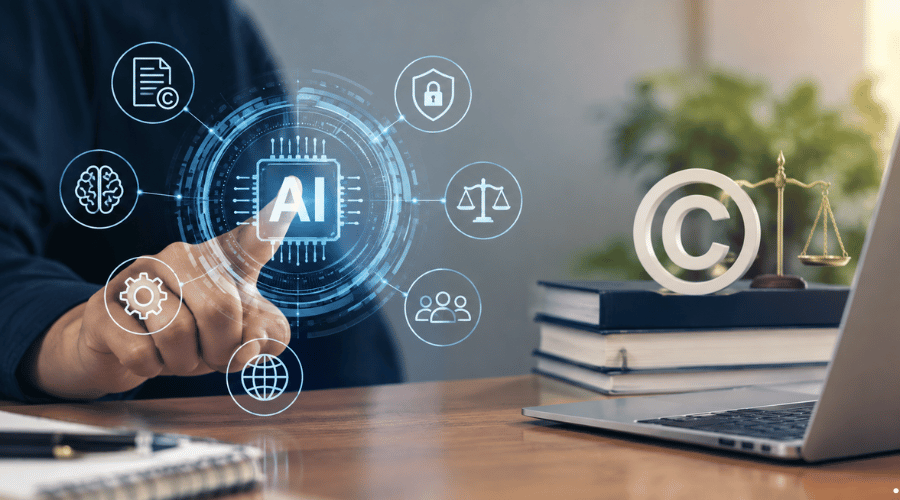
Artificial intelligence is one
of the most significant technological advances of our time. Like any big
breakthrough, it presents both opportunity and challenges. Instead of viewing
AI as a computer waiting to replace us, we should consider it as a tool capable
of expanding what humans can do. The calculator did not eliminate math. The
microscope did not render scientists useless. The internet increased access to
knowledge rather than eliminating it. The true task, then, is not to stop
artificial intelligence. It is to learn how to use it effectively. And the
opportunity ahead of us is huge.
DON'T FEAR THE FUTURE. LEARN TO SHAPE
IT.
AI will undoubtedly change many
professions, industries, and aspects of everyday life. But change does not
necessarily mean loss. It can mean reinvention, new opportunities, greater
efficiency, and discoveries that were previously beyond our reach. The future
belongs neither entirely to humans nor to machines. It belongs to those who can
bring the strengths of both together.
Artificial Intelligence is an
opportunity, definitely not a threat- it is not the end of human potential. It
can be the beginning of a new chapter in it.