Raised by YouTube
How
Free Learning Platforms Are Producing the Next Generation of Experts
For much of modern history,
expertise was closely linked to institutions. To learn a skill, students
enrolled in schools, attended universities or paid for specialised training.
Knowledge was often concentrated within classrooms and academic campuses.
Today, that model is being
challenged by a powerful force that fits into the palm of a hand.
Across the world, millions of
students are learning new skills through YouTube and other free digital
learning platforms. From coding and graphic design to photography, finance and
entrepreneurship, a growing number of young people are acquiring knowledge from
creators they have never met and classrooms they have never entered.
The rise of free online education is
reshaping how expertise is developed and who gets access to it. For many
learners, YouTube has become far more than an entertainment platform. It has
evolved into one of the largest classrooms in the world.
The
World's Largest Open University
Every day, students search YouTube
for explanations, tutorials and solutions to problems they encounter in school,
college or professional life.
Whether it is understanding
calculus, learning a programming language, mastering video editing or preparing
for competitive examinations, there is often a free tutorial available within
seconds.
Unlike traditional education, these
resources are available around the clock. Students can learn at their own pace,
pause lessons, revisit concepts and explore subjects beyond prescribed
curricula.
For learners in regions where access
to quality education remains limited, free learning platforms have become
valuable tools for personal and professional development.
Knowledge that once required expensive
textbooks or formal enrolment is now accessible to anyone with an internet
connection.
The
Rise of YouTube Educators
One of the most remarkable
developments in recent years has been the emergence of YouTube educators. Many
of these creators have built loyal audiences by simplifying complex subjects
and making learning more engaging. They combine expertise with storytelling,
visual demonstrations and practical examples that resonate with modern
learners.
In some cases, individual educators
attract larger audiences than traditional educational institutions. Their
influence extends across national boundaries, allowing students from different
countries to learn from the same source.
The success of these educators
reflects a changing expectation among learners. Students increasingly seek
clarity, accessibility and relevance rather than lengthy lectures and academic
jargon.
The popularity of educational
content also demonstrates that learning remains highly valued, even in an age
dominated by digital entertainment.
Self-Taught Coders and the New Learning Revolution
Perhaps nowhere is the impact of
free learning platforms more visible than in the technology sector.
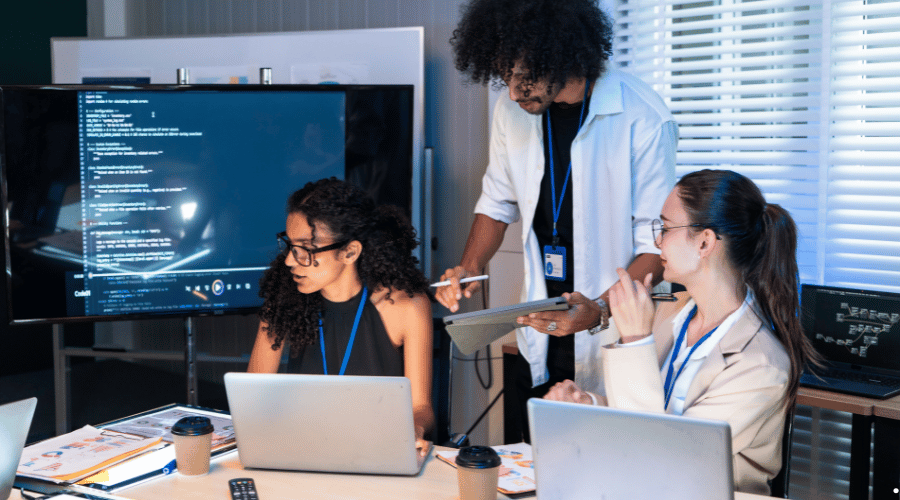
A growing number of software
developers, web designers and data analysts have built successful careers
through self-directed learning. Many began with free coding tutorials available
online and gradually developed skills through practice and experimentation.
Employers today are often more
interested in demonstrated ability than the pathway through which that ability
was acquired. A strong portfolio of projects can sometimes speak louder than
formal qualifications alone.
This shift has created opportunities
for motivated learners who may not have access to expensive degree programmes
but possess the determination to develop valuable technical skills.
The rise of self-taught coders
highlights a broader trend. Learning is becoming increasingly flexible,
personalised and independent.
Creating
Careers Through Content
The digital learning revolution is
not only producing learners. It is also creating educators and entrepreneurs.
Many young people who initially
turned to YouTube to acquire skills are now building careers as content
creators themselves. They produce tutorials, educational videos, podcasts and
specialised learning resources for audiences around the world.
This has given rise to an entirely
new generation of digital creators whose businesses are built around sharing
knowledge.
Some teach coding. Others explain
science, finance, languages or career development. Their success demonstrates
how expertise can be transformed into influence and economic opportunity.
For students, this represents a
career pathway that barely existed a decade ago.
Alternative
Education Finds Its Place
The growing popularity of free
learning platforms does not mean that traditional education is becoming
irrelevant. Universities continue to play an important role in research,
academic development and professional accreditation.
However, alternative education
pathways are gaining legitimacy.
Increasingly, students are combining
formal education with online certifications, project-based learning and self-directed skill development. Employers are also recognising the value of
continuous learning in a rapidly changing economy.
The question is no longer where
learning takes place. The more important question is whether meaningful
learning is taking place at all.
This shift is encouraging learners
to take greater responsibility for their own development rather than relying
exclusively on institutional structures.
The
Future of Learning Is Open
The next generation of experts may
not emerge solely from prestigious campuses or traditional classrooms. Many
will develop their skills through a combination of formal education, digital
resources and independent exploration.
Platforms such as YouTube have
democratised access to knowledge on an unprecedented scale. They have empowered
students to learn from global experts, acquire practical skills and pursue
opportunities that might otherwise have remained out of reach.
In an increasingly connected world,
education is becoming more open, flexible and learner-driven. The classroom is
no longer confined to four walls, and expertise is no longer reserved for a
select few.
For millions of ambitious learners
around the world, the journey toward mastery may begin with something as simple
as clicking play on a video.
Source: ETN