Degrees Are No Longer Enough
What
Global Employers Expect Beyond Academic Qualifications
For decades, earning a university
degree was considered the most reliable pathway to professional success. A
strong academic record often served as a ticket to employment and career
growth. While qualifications remain important, the modern job market is
undergoing a significant transformation. Increasingly, employers across the
world are looking beyond degrees and asking a more important question. What can
a candidate actually do?
From multinational corporations to
emerging startups, hiring managers are placing greater emphasis on practical
skills, adaptability and real-world experience. As technology reshapes
industries and Artificial Intelligence changes the nature of work, academic
credentials alone are no longer enough to guarantee employability.
A degree may open the door, but it
is a broader set of competencies that determines who ultimately walks through
it.
The
Shift From Qualification to Capability
The changing expectations of
employers reflect the realities of a rapidly evolving global economy. New
technologies, digital business models and remote work environments have created
demand for skills that are often not fully captured in traditional academic transcripts.
Companies today seek professionals
who can solve problems, communicate effectively and adapt quickly to change.
Employers want individuals who can contribute from day one rather than spend
months learning workplace fundamentals.
As a result, hiring decisions are
increasingly influenced by evidence of practical capability rather than
academic achievement alone.
This shift is particularly evident
in industries such as technology, marketing, design, media, finance and
consulting, where skills evolve far more quickly than university curricula.
Digital
Skills Are Becoming Essential
One of the most sought-after
attributes in today's workforce is digital competence.
Regardless of profession, employees
are expected to navigate digital platforms, analyse information, collaborate
virtually and use technology to improve productivity. What was once considered
a specialised skill is now becoming a basic workplace requirement.
From data analysis and cloud
computing to content creation and project management software, digital literacy
is increasingly viewed as an essential employability skill.
Even professions traditionally
considered non-technical are being influenced by digital transformation.
Teachers, healthcare professionals, lawyers and business managers now rely
heavily on technology in their daily work.
Students entering the workforce must
therefore develop confidence in using digital tools if they wish to remain
competitive in an increasingly technology-driven world.
Communication
Remains a Powerful Advantage
While technology continues to
reshape workplaces, one skill remains consistently valuable across industries
and geographies.
The ability to communicate
effectively.
Global employers place significant
importance on written communication, presentation skills and interpersonal
interactions. In multicultural and often remote working environments, clear
communication has become critical for collaboration and productivity.
Professionals are expected to
express ideas confidently, engage with diverse teams and build meaningful
professional relationships.
Many recruiters report that
candidates with excellent communication skills often stand out even when
competing against applicants with stronger academic records.
Technical expertise may secure an
interview. Communication skills frequently determine career progression.
AI
Literacy Is the New Workplace Currency
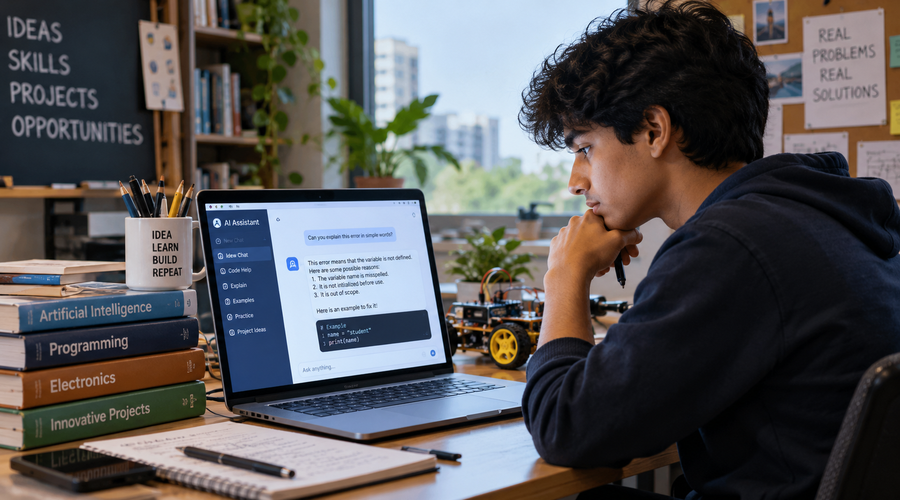
Artificial Intelligence is no longer
confined to technology companies. It is rapidly becoming part of everyday work
across sectors ranging from healthcare and education to finance and
manufacturing.
Consequently, AI literacy is
emerging as a highly desirable skill.
Employers are not necessarily
looking for AI engineers in every role. Instead, they want professionals who
understand how AI tools work, where they can be applied and how they can be
used responsibly.
Employees who can leverage AI to
improve efficiency, analyse information and enhance decision-making are likely
to have a significant advantage in the job market.
Equally important is the ability to
critically evaluate AI-generated outputs. Human judgment remains essential in
ensuring accuracy, ethics and contextual understanding.
As AI continues to become embedded
in workplace processes, familiarity with these technologies is rapidly moving
from an advantage to an expectation.
The
Rise of Portfolio Culture
Perhaps one of the most notable
changes in recruitment is the growing importance of portfolios.
Employers increasingly want to see
evidence of a candidate's abilities rather than simply read about them on a
resume. Portfolios provide tangible proof of skills, projects and achievements.
For designers, writers and software
developers, portfolios have long been standard practice. Today, the concept is
expanding across disciplines.
Business students showcase
consulting projects. Marketing graduates present campaign case studies. Data
analysts highlight research projects. Entrepreneurs demonstrate startup
initiatives and innovation challenges.
A portfolio tells a story that
academic transcripts often cannot. It demonstrates initiative, creativity and
the ability to apply knowledge in practical settings.
In many cases, a strong portfolio
can be as influential as a degree itself.
Preparing
for the Future of Work
Universities continue to play a
vital role in developing knowledge and expertise. However, students must
recognise that employability increasingly depends on a combination of
education, skills and experience.
Building digital competence,
strengthening communication abilities, developing AI literacy and creating a
meaningful portfolio should become integral parts of every student's learning
journey.
The future workforce will be defined
not only by what people know but by how effectively they can apply that
knowledge in real-world situations.
In a competitive global employment
market, degrees still matter. Yet they are no longer the complete story.
Employers are looking for adaptable, skilled and future-ready professionals who
can thrive in a rapidly changing world.
For today's students, the message is
clear. A qualification may earn attention, but it is capability that ultimately
creates opportunity.
Source: ETN