Author: Neelam Indora
Puran Murti
College of Pharmacy
Pharmacy is a profession built on knowledge, judgement,
responsibility and service. Yet, in many educational settings, learning can
become closely tied to examinations: students memorise definitions, reproduce
notes and focus on likely questions. Examinations are necessary for assessing
progress, but they cannot, on their own, prepare a future pharmacist for every
medicine, patient or challenge that will arise during a professional career.
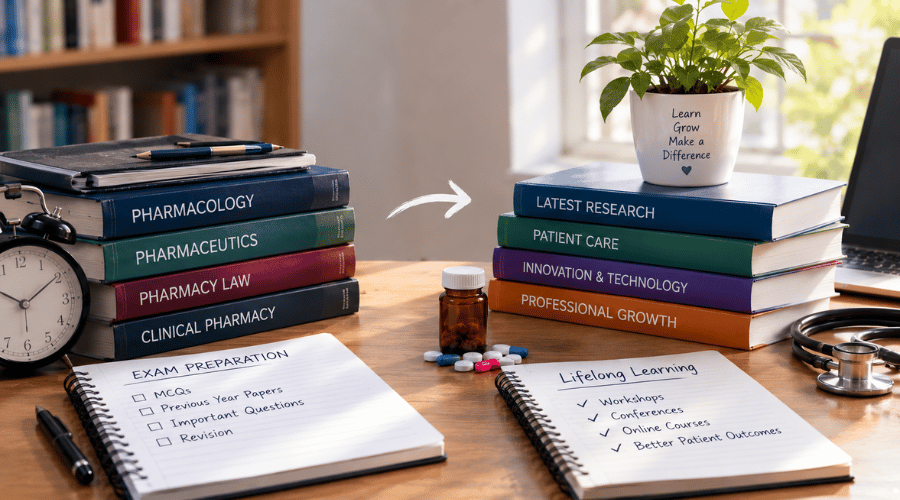
The real purpose of pharmacy education is not simply to help students pass a
test; it is to prepare them to keep learning, think critically and make safe,
evidence-informed decisions throughout their lives.
The limits of examination-oriented
learning
An examination-oriented approach often places marks, grades
and syllabus completion at the centre of student life. Under pressure to cover
a large syllabus, students may rely on memorisation rather than understanding.
They might remember a drug’s mechanism of action for an answer sheet but
struggle to explain how that medicine should be used safely in a patient with
several health conditions. Information learned only for an examination can also
fade quickly when it is not connected to practice.
This does not mean examinations have no value. Well-designed
assessments can check foundational knowledge, encourage consistent study and
identify areas that need improvement. The problem arises when examinations
become the destination rather than one step in the learning process. If
students are rewarded mainly for recalling information, they may have fewer
opportunities to practise communication, problem-solving, ethical reasoning and
clinical judgement.
Why lifelong learning matters in
pharmacy
Medicines, technologies, treatment guidelines and
public-health needs continue to evolve. New evidence can change how a medicine
is selected, monitored or used. Pharmacists must also respond to antimicrobial
resistance, medication-safety concerns, digital health systems, new dosage
forms and the needs of people living with multiple long-term conditions. A
qualification provides a foundation, but it cannot be the final word in a
career that depends on current and reliable knowledge.
Lifelong learning means taking continuing responsibility for
one’s professional development. It includes formal courses and workshops, but
it also includes reading trusted evidence, discussing difficult cases with
colleagues, reflecting on mistakes, learning from patients and seeking
feedback. A lifelong learner does not assume that knowing something today
guarantees that the same answer will be appropriate tomorrow. Instead, they
know how to ask good questions, locate credible information, evaluate evidence
and apply it carefully.
From memorising facts to applying
knowledge
Pharmacy education can make this shift by connecting
concepts with authentic situations. Case-based learning, problem-based
learning, simulations, laboratory investigations, community placements and
hospital exposure help students see why knowledge matters. For example, a case
involving a patient taking several medicines can prompt students to identify
possible interactions, consider adherence barriers, explain precautions in
plain language and decide when a prescriber should be consulted.
These activities encourage students to move beyond the
question, “What is the correct answer?” towards deeper questions: “What
evidence supports this decision?”, “What information is still missing?”, “What
could put the patient at risk?” and “How will I know whether the treatment is
working?” Such questions build habits of reasoning that are useful well beyond
the classroom.
The teacher’s role: from information
provider to learning facilitator
In a lifelong-learning culture, teachers remain essential,
but their role expands. Along with explaining core principles, they guide
inquiry, model professional curiosity and help learners judge the quality of
information. Instead of relying exclusively on lectures, educators can use
discussions, group projects, flipped classrooms, demonstrations, reflective
writing and structured feedback. Students should be encouraged to explain their
reasoning, respectfully challenge assumptions and learn from errors in a safe
environment.
Feedback is especially important. A mark tells a student how
they performed; constructive feedback helps them understand why, what to
improve and how to improve it. When students review their own progress and set
specific learning goals, assessment becomes part of learning rather than merely
a final verdict.
Technology: a tool, not a substitute
for judgement
Digital libraries, online courses, webinars, professional
networks and evidence databases have made continuing education more accessible.
Technology can help students revisit difficult concepts, follow developments
and collaborate across institutions. At the same time, the abundance of online
information makes information literacy essential. Learners need to distinguish
reliable, current evidence from unsupported claims, promotional material and
misleading content.
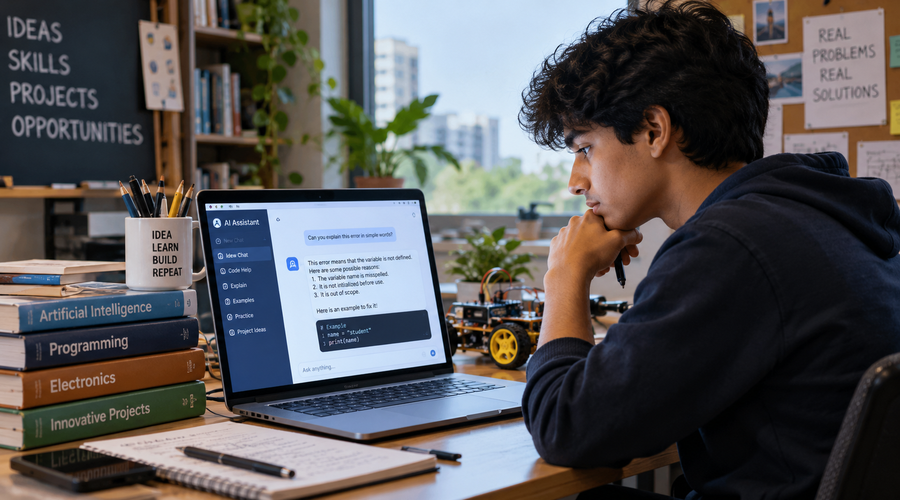
Digital tools—including artificial intelligence—should
support, not replace, professional judgement. Students must verify important
claims against trustworthy sources, protect patient confidentiality and
understand the ethical and practical limits of the tools they use. The central
skill is not simply finding an answer quickly; it is judging whether the answer
is accurate, relevant and safe.
The shared responsibility of
institutions, students and employers
A move towards lifelong learning cannot depend on students
alone. Educational institutions need to create opportunities for experiential
learning, interprofessional teamwork, research, mentoring and reflection.
Libraries and digital resources should be accessible, and curricula should
connect scientific foundations with patient care, public health, regulation and
professional ethics.
Students, in turn, can develop manageable habits: maintain a
learning journal, read a short evidence-based update regularly, ask questions
during placements, seek feedback and revisit topics that are difficult.
Employers and professional organisations can reinforce these habits through
mentoring, continuing professional development and supportive workplace
learning. In India, pharmacy colleges can strengthen this approach by linking
classroom teaching with community pharmacy, hospitals, industry, research and
public-health settings, while aligning educational practices with applicable
regulatory and professional standards.
A practical roadmap for lifelong
learning
●
Set clear learning
goals: identify what you need to know, why it matters and how you will check
your progress.
●
Use credible sources:
consult current textbooks, peer-reviewed literature, recognised guidelines and
authoritative medical information.
●
Connect theory with
practice: discuss cases, practise counselling and reflect on how scientific
principles affect real decisions.
●
Seek and use feedback:
treat feedback as information for improvement, not simply as a judgement of
ability.
●
Reflect on experience:
ask what went well, what could be safer or clearer, and what should be learned
next.
●
Keep an
evidence-minded attitude: remain open to new findings and update decisions when
reliable evidence changes.
Conclusion: learning that continues
beyond graduation
The future of pharmacy education lies in balancing strong
foundational knowledge with curiosity, practical competence and a commitment to
continuous improvement. Examinations can measure important parts of learning,
but they cannot fully capture the judgement, empathy and adaptability that safe
pharmacy practice requires. The most successful educational approach is
therefore not one that ignores examinations, but one that places them within a
broader journey of development.
A pharmacy graduate should leave college with more than a
degree and a collection of notes. They should leave with the confidence to ask
questions, the discipline to verify information, the humility to recognise
uncertainty and the motivation to keep improving. When pharmacy education moves
from examination-oriented learning to lifelong learning, it serves not only
students and the profession—it ultimately serves patients and society.
“The goal is not merely to remember the right answer for an
examination, but to keep finding the safest and most evidence-informed answer
for every patient.”