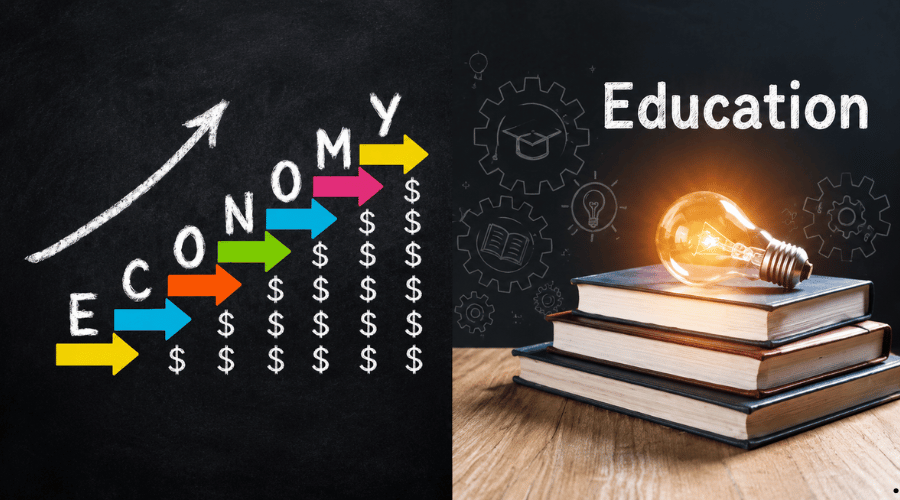
The Attention Economy vs Education
Can
Students Still Focus in the Age of Reels and Short Videos?
A few years ago, students would
often complain about long textbooks, difficult assignments and lengthy
lectures. Today, a new challenge is competing for their attention.
From the moment they wake up,
students are surrounded by an endless stream of notifications, short videos,
trending reels and algorithm-driven content. Social media platforms compete
fiercely for every second of user engagement, creating what experts call the
"attention economy", where attention itself has become one of the
world's most valuable commodities.
The consequences are becoming
increasingly visible in classrooms. Teachers report shorter attention spans,
reduced concentration and growing difficulty in sustaining student engagement
during lessons. As digital content becomes faster and more addictive, an
important question emerges. Can students still focus deeply enough to learn
effectively?
The
Rise of the Attention Economy
The attention economy is built on a
simple principle. The longer people remain on a platform, the more valuable
they become to advertisers and content creators.
As a result, social media companies
invest heavily in designing experiences that keep users scrolling. Short
videos, personalised recommendations and instant gratification are carefully
engineered to capture and retain attention.
For students, this means constant
exposure to highly stimulating content that requires very little effort to
consume. A few seconds of entertainment quickly lead to another video and then
another. Before long, an hour has disappeared.
While these platforms provide
entertainment and social connection, they are also reshaping how young people
interact with information.
The
Challenge of Reduced Concentration
One of the most common concerns
among educators is the apparent decline in sustained concentration. Studying
often requires patience, reflection and the ability to engage with complex
ideas over extended periods. Reading a chapter, solving mathematical problems
or conducting research demands a level of mental endurance that differs
significantly from consuming short digital content.
Many students now find themselves
reaching for their phones after only a few minutes of study. Even brief
interruptions can disrupt focus and make it more difficult to return to deep
learning.
The result is not necessarily a lack
of intelligence or motivation. Rather, it reflects a growing habit of seeking
constant stimulation.
When the brain becomes accustomed to
rapid content consumption, slower educational activities can begin to feel
unusually demanding.
Understanding
the Dopamine Effect
Neuroscientists often point to the
role of dopamine in explaining the appeal of short-form content. Dopamine is a
chemical associated with reward and motivation. Every time users encounter
entertaining content, receive likes or discover something unexpected, the brain
experiences a small reward response.
Social media platforms are highly
effective at triggering these responses repeatedly. The unpredictability of
what appears next encourages users to keep scrolling in search of another
rewarding moment.
For students, this pattern can
create challenges when engaging with tasks that offer delayed rewards. Studying
for an examination or completing a research project may not provide the same
immediate sense of satisfaction as watching a series of entertaining videos.
Over time, the contrast between
instant gratification and long-term academic effort can influence learning
habits and study behaviour.
How
Learning Habits Are Changing
The digital age is not entirely
negative for education. Students today have access to more information than any
previous generation. Educational videos, online courses and interactive
learning platforms have made knowledge more accessible than ever before.
However, the way students consume
information is changing.
Many learners prefer short summaries
over detailed reading. They often seek quick explanations instead of engaging
with lengthy discussions. While this approach can be useful for revision, it
may limit deeper understanding of complex subjects.
Critical thinking, problem-solving,
and analytical reasoning require time and intellectual effort. These skills
develop through sustained engagement rather than rapid consumption.
The challenge for educators is
finding ways to combine the advantages of digital learning with the depth
required for meaningful education.
Managing
Digital Distractions
Digital distractions have become one
of the biggest obstacles to effective learning. Notifications, messages, gaming
apps and social media feeds constantly compete for attention. Even when
students are not actively using their devices, the temptation to check them can
reduce productivity.
Research consistently shows that
multitasking often decreases learning efficiency. Switching repeatedly between
studying and digital distractions forces the brain to constantly refocus,
reducing comprehension and retention.
Many students underestimate the
impact of these interruptions. What feels like a glance at a notification
can quickly become several minutes of distraction.
Developing healthy digital habits is
therefore becoming an essential academic skill.
Reclaiming
Focus in a Digital World
The solution is not to reject
technology. Digital platforms are now an integral part of modern life and
education. Instead, students must learn how to use technology intentionally
rather than allowing it to control their attention.
Simple strategies such as scheduled
study periods, notification management, device-free learning sessions and
mindful screen use can significantly improve concentration.
Educational institutions also have
an important role to play by teaching students about digital wellness,
attention management and responsible technology use.
The future of education will not be
defined by a battle between technology and learning. It will depend on how
effectively students balance both.
In an age where attention is
constantly being competed for, the ability to focus may become one of the most
valuable skills a student can possess. Knowledge remains important, but without
sustained attention, even the best educational opportunities can slip away with
the next swipe of a screen.
Source: ETN