The Multi-Billion Rupee Industry
The
Coaching Economy of India
Every year, millions of Indian
students prepare for some of the world's most competitive examinations. From
engineering and medical entrance tests to civil services, management programmes
and government recruitment examinations, success often depends on outperforming
hundreds of thousands, sometimes millions, of competitors.
In this intensely competitive
environment, an industry has emerged that is almost as influential as formal
education itself. The coaching economy of India has grown into a multi-billion
rupee ecosystem that shapes academic aspirations, career decisions and family
investments. What began as a supplementary support system has evolved into a
parallel education structure that influences how students learn, prepare and
compete. For many families, coaching is no longer viewed as optional. It is
seen as an essential step on the path to academic success.
The
Birth of the Kota Model
No discussion about India's coaching
industry can begin anywhere other than Kota. The Rajasthan city transformed
itself from an industrial centre into the country's most recognised coaching
hub. Over the years, thousands of students migrated to Kota to prepare for
examinations such as JEE and NEET. Institutions including Allen Career
Institute, Motion Education and several others built large educational
ecosystems around competitive exam preparation.
Hostels, libraries, study centres,
cafeterias and support services emerged to serve the growing student population.
Entire neighbourhoods became dependent on the student economy. The Kota model
demonstrated that coaching could become a large-scale industry capable of
attracting students from every corner of the country. Its success also inspired
similar coaching clusters in cities such as Hyderabad, Delhi, Patna and Pune.
Why
Coaching Became So Powerful
The rise of coaching centres is
closely linked to the structure of India's education and employment system. Admission
to premier institutions such as the Indian Institutes of Technology, All India
Institute of Medical Sciences and leading management schools depends on highly
competitive entrance examinations. The difference between selection and
rejection can often be a few marks.
This reality has encouraged students
and parents to seek specialised preparation beyond regular school education.
Coaching institutes promise structured learning, extensive practice tests,
performance analytics and examination strategies designed to improve outcomes. For
ambitious families, coaching is frequently viewed as an investment rather than
an expense. The result is an industry that continues to grow despite changing
educational trends.
The
Digital Revolution in Coaching
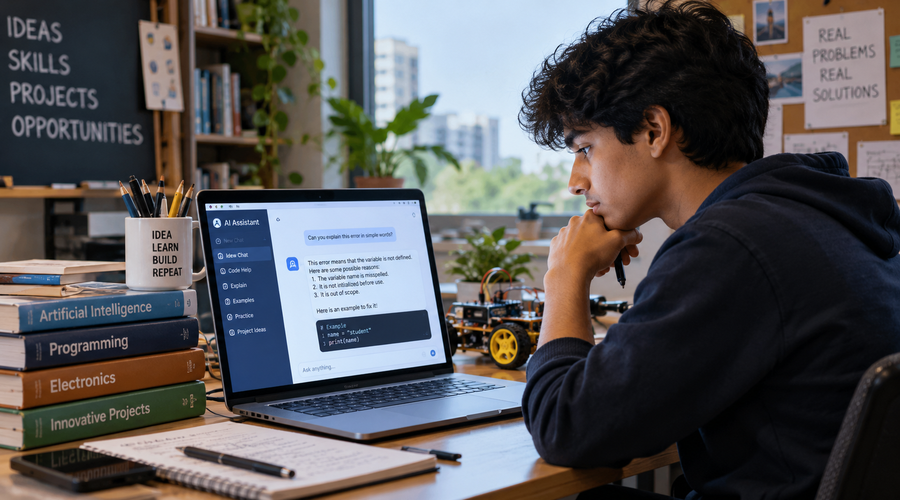
The pandemic accelerated one of the
biggest transformations in the coaching sector. Online learning platforms
brought coaching into students' homes and dramatically expanded access.
Geography became less important as learners gained access to lectures, study
materials and mock tests through digital platforms. Companies such as Physics Wallah, Unacademy
and BYJU'S helped redefine the coaching landscape. A student in a small town
could now learn from some of the country's most recognised educators without
relocating to a major coaching hub. Online coaching also intensified
competition among providers, leading to more affordable options and wider
access. For many students, the digital classroom became an alternative to
traditional coaching centres.
The
Economics Behind the Industry
The coaching economy extends far beyond
teaching. In cities known for exam preparation, students support housing
markets, food services, transportation networks, bookstores and local
businesses. Thousands of jobs are directly or indirectly linked to coaching
activities. In Kota, for example, student spending influences large segments of
the local economy. Landlords, shop owners, hostel operators and transportation
providers all benefit from the steady influx of students. The impact is so
significant that changes in student enrolment can affect the economic health of
entire communities. This illustrates how coaching has evolved into a powerful
economic sector that reaches far beyond education.
The
Mental Health Conversation
Despite its success, the coaching
industry faces growing scrutiny. The pressure associated with competitive
examinations can be immense. Students often spend long hours studying while
dealing with expectations from parents, teachers and society. The challenges
are particularly visible in cities where students live away from home for
extended periods. Academic stress, anxiety and feelings of isolation have
become important concerns. In recent years, conversations about student
well-being have become more prominent. Educational institutions, policymakers
and mental health professionals have emphasised the need for greater emotional
support and healthier learning environments. The discussion is no longer
limited to academic performance. Increasingly, it includes the overall
well-being of students navigating intense competition.
Is
Coaching Replacing School Education?
Another important question concerns
the relationship between coaching and formal schooling. Critics argue that the
dominance of coaching reflects gaps within the mainstream education system.
When students depend heavily on external coaching, it raises questions about
whether schools alone are adequately preparing them for competitive
examinations. Supporters, however, contend that coaching fulfils a specialised
role by focusing on examination strategies, advanced practice and performance
optimisation.
The reality probably lies somewhere
in between. Coaching has become deeply embedded in India's educational culture
because it addresses demands that conventional classrooms often struggle to
meet.
The
Future of India's Coaching Economy
The coaching industry is unlikely to
disappear anytime soon. If anything, it is becoming more sophisticated. Artificial
Intelligence-powered learning tools, adaptive testing platforms and
personalised study plans are beginning to reshape how students prepare for
examinations. Hybrid models that combine online convenience with offline
mentoring are also gaining popularity.
At the same time, there is growing
recognition that success should not come at the cost of student well-being. The
future of India's coaching economy will depend on finding a balance between
academic excellence and holistic development. For millions of students,
coaching remains a gateway to opportunity. Yet the larger challenge is ensuring
that the pursuit of success also nurtures confidence, resilience and personal
growth. The industry has already transformed how India prepares for competitive
examinations. Its next chapter may determine how the nation balances ambition
with well-being in the years ahead.
Source: ETN